Kos & Kaos, Where Curiosity Shapes Community.
Kos & Kaos (Coziness & Chaos) — where diverse Jewish backgrounds and identities converge, united by a shared dedication to dialogue and Jewish culture. We meet the world with curiosity, spark connections, and create meaningful experiences that invite everyone to engage and explore.
Kos & Kaos has always lived somewhere between a cocktail party and a public conversation.
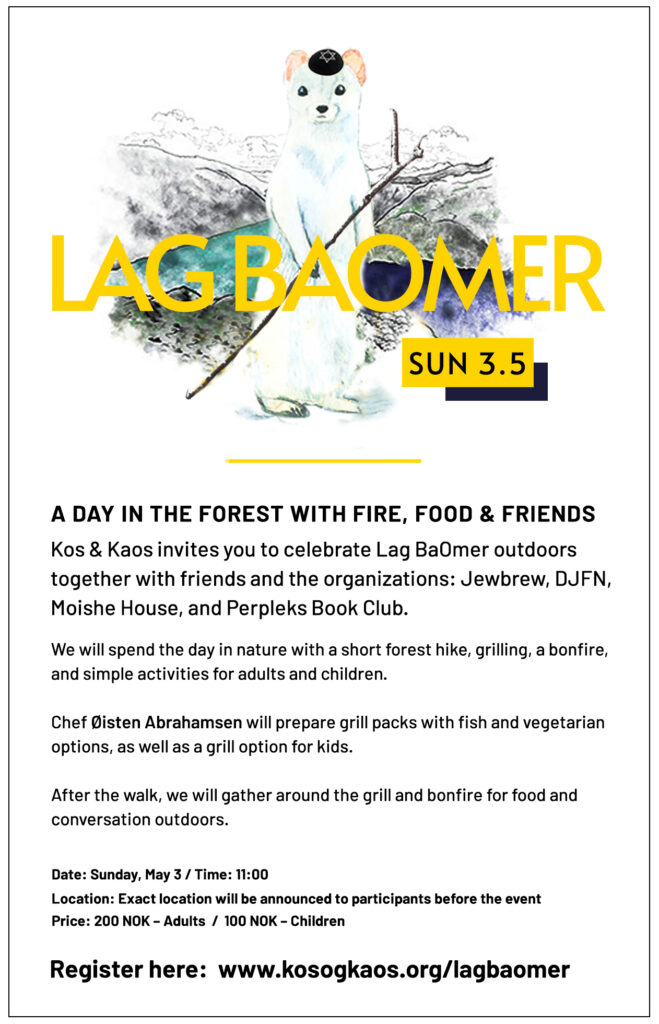
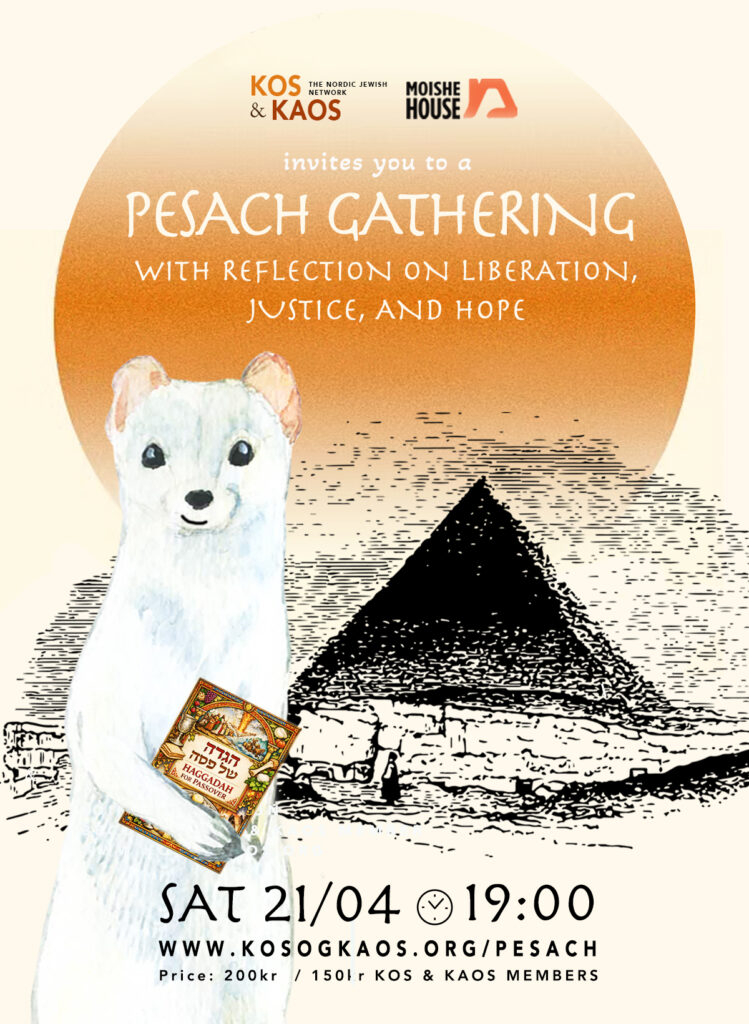
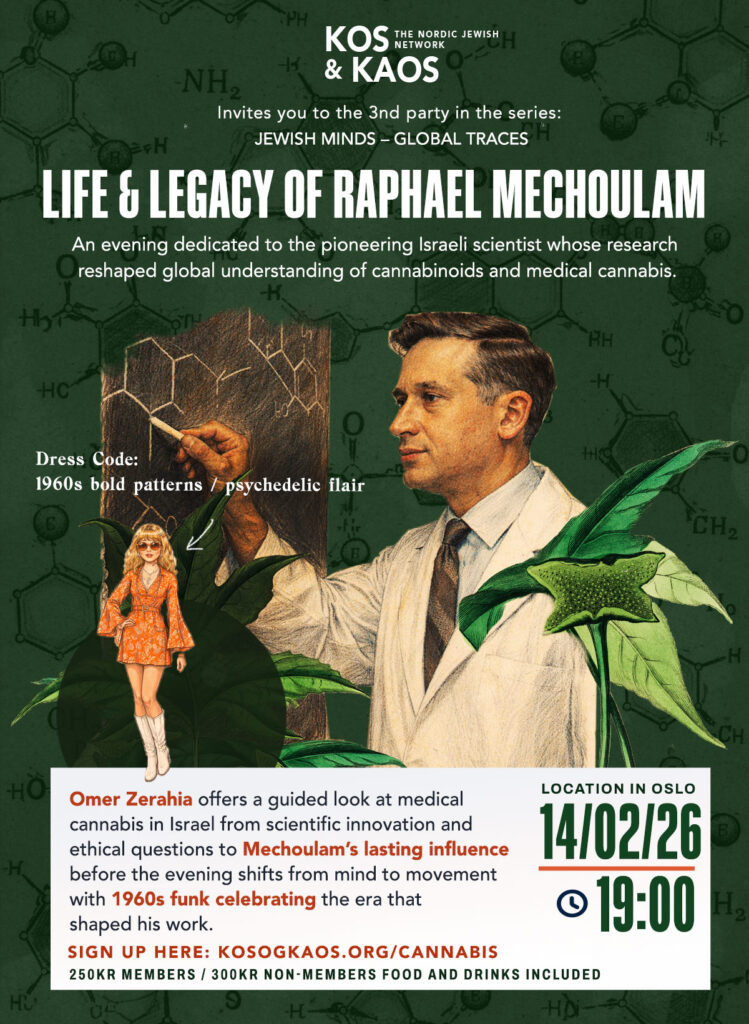
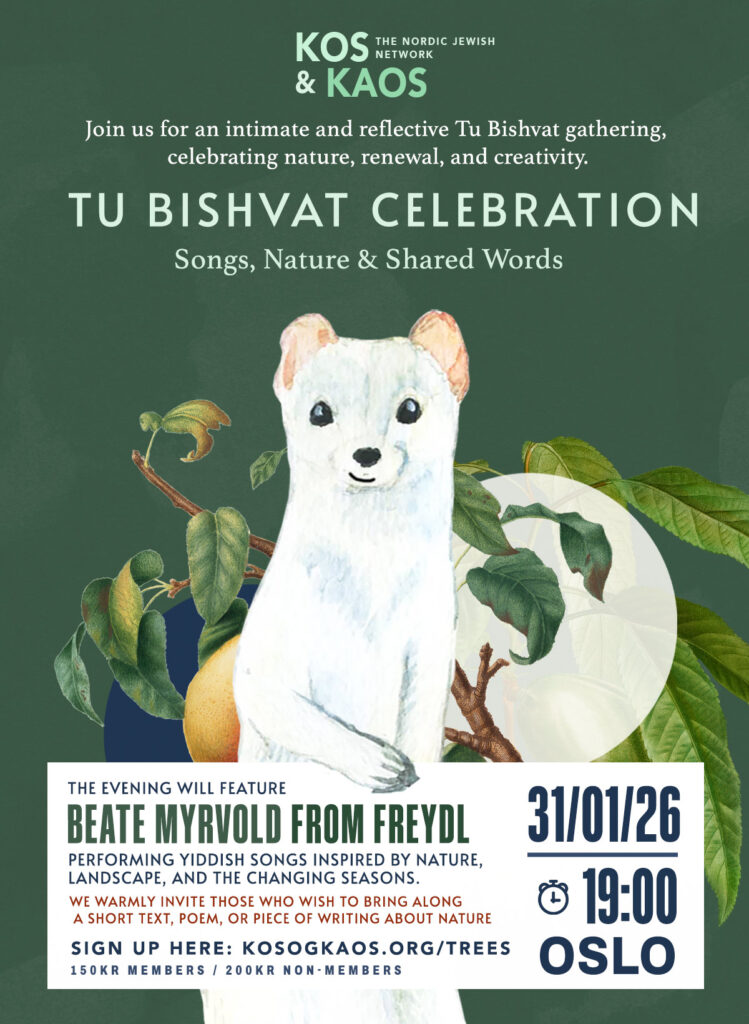
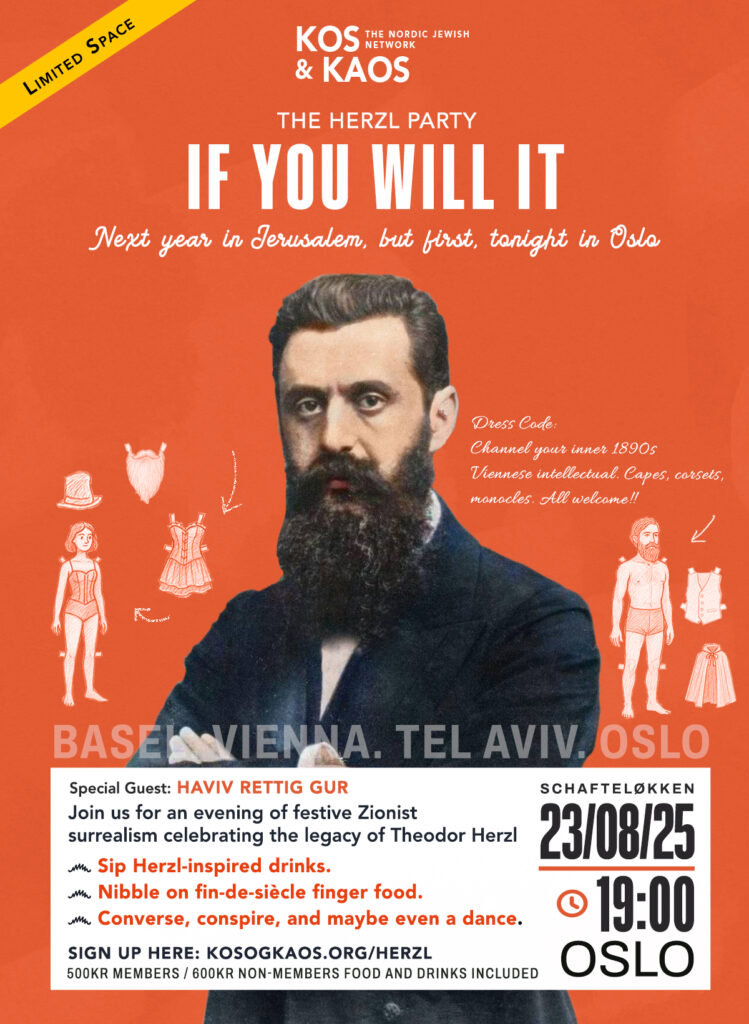
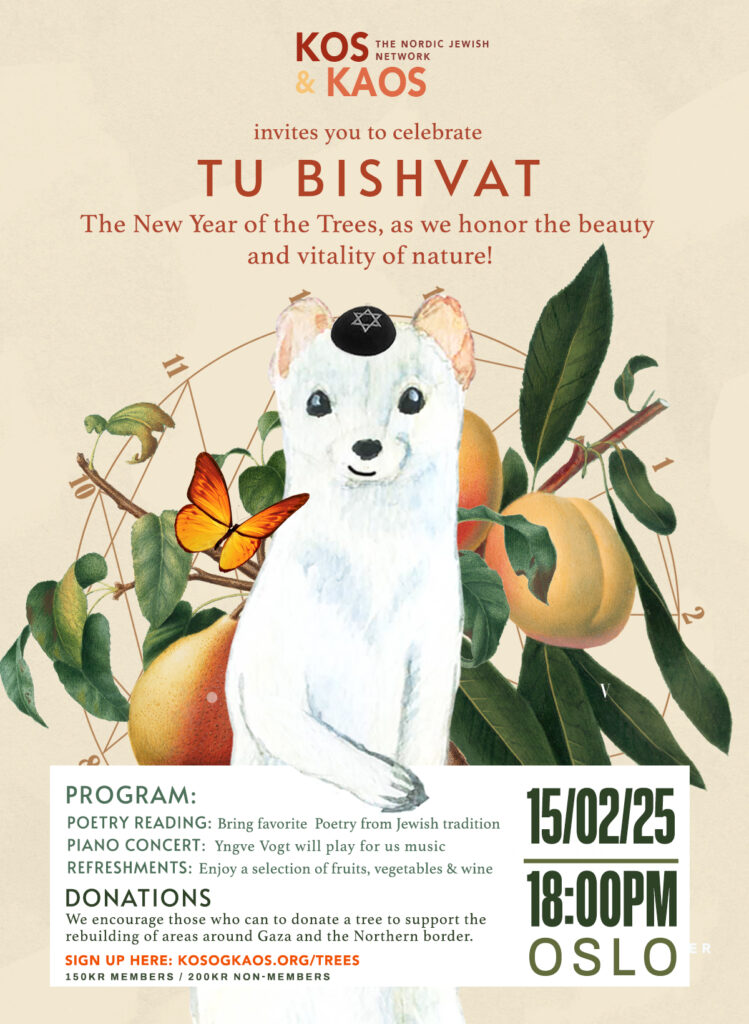
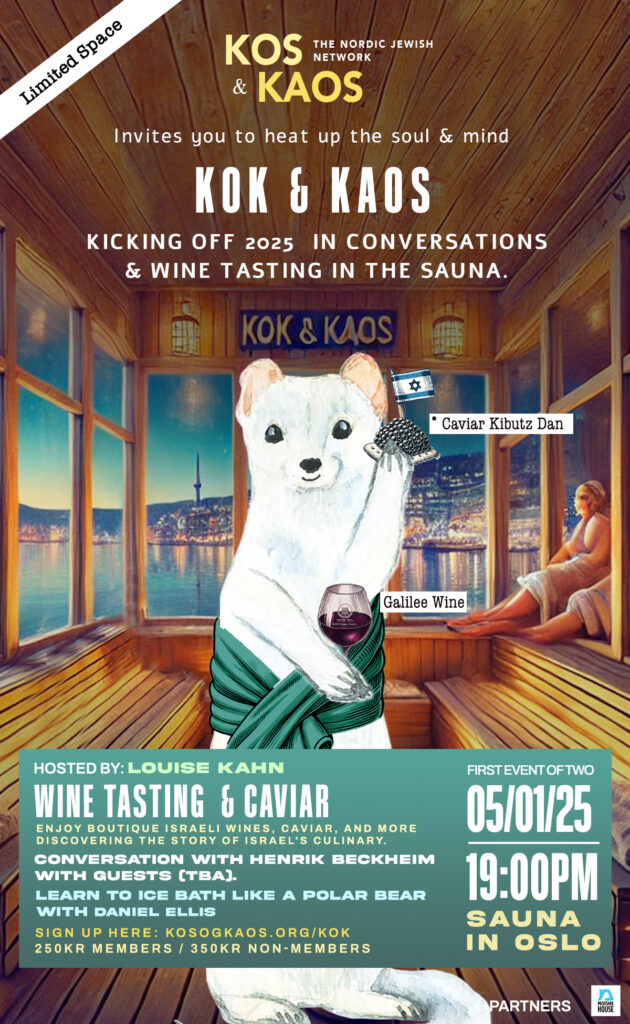
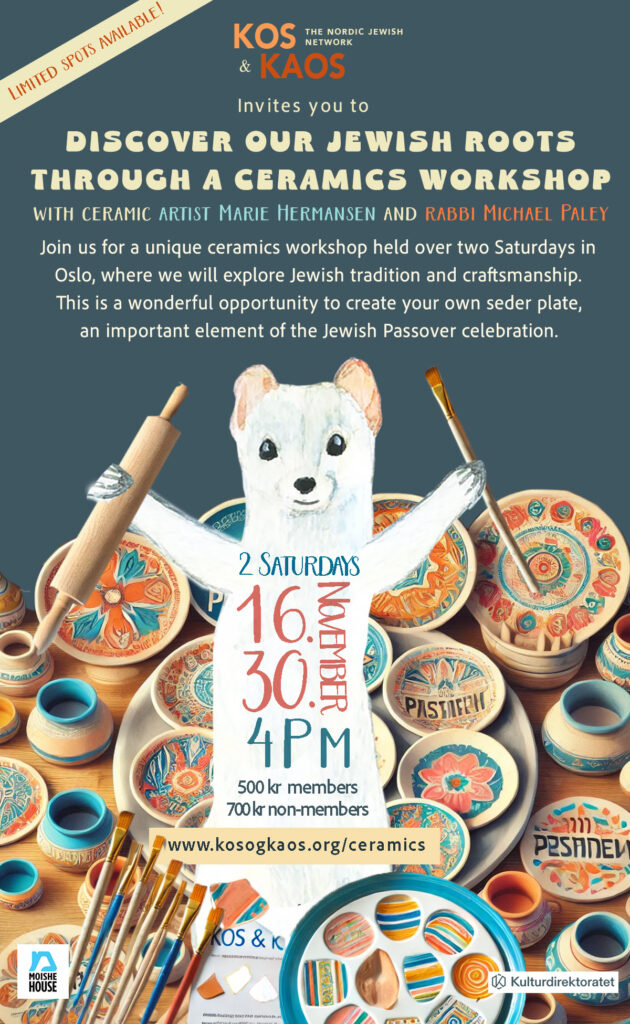
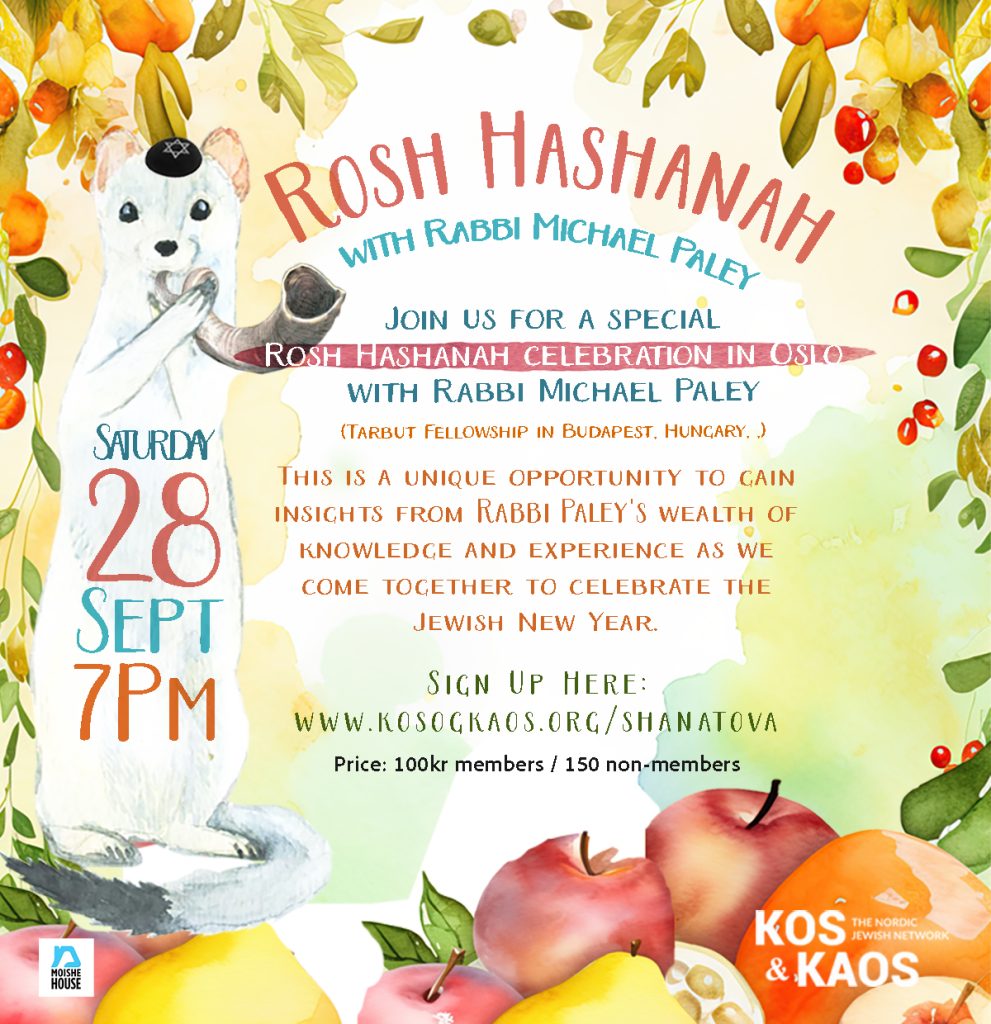
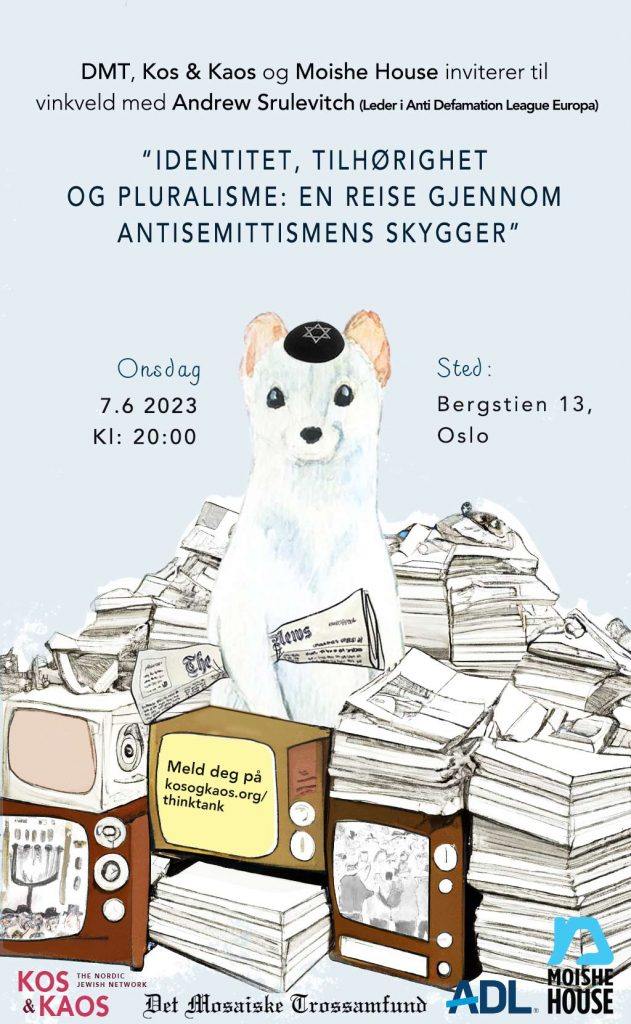
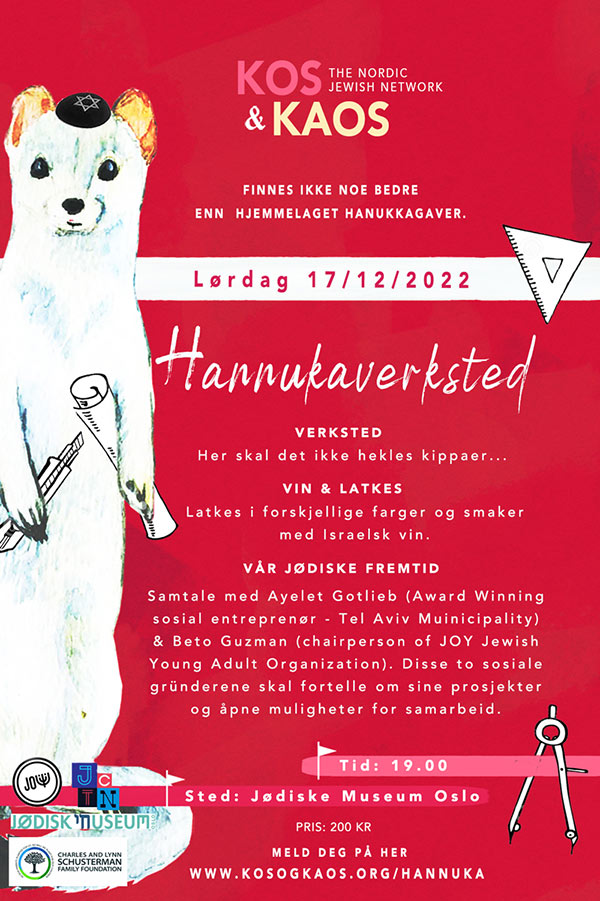
We began in Oslo in 2016, gathering people around Jewish holidays, food, art and ideas. A conversation might begin with an ancient text and end with contemporary politics, with a scholar on stage, music in the room and a cocktail created for the occasion.
People arrived by different paths – through faith, family, culture, history, Israel, memory or a sense of belonging they could not quite name. No one had to resolve these differences before joining us.
We gathered first. Belonging often followed.
Kos & Kaos was created by the people who entered the room: members with stories and questions, artists and musicians, rabbis and scholars, cooks and volunteers. Some came to speak or perform. Others came to listen. Many returned and became part of the community.
Together, they made Kos & Kaos.
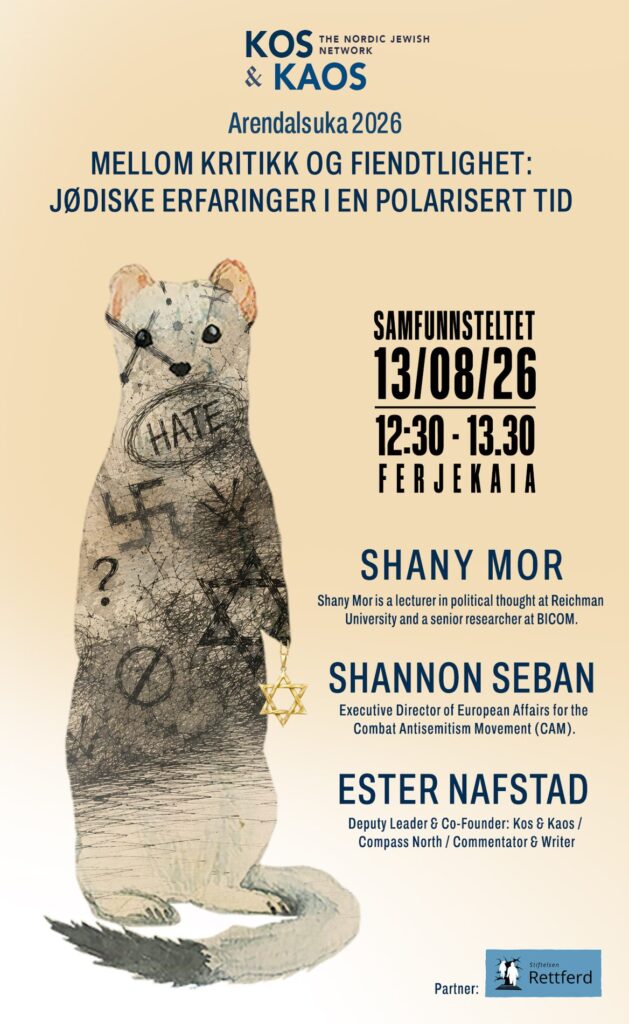
Over time, the circle widened. Questions first explored around our tables travelled into galleries, cultural institutions and public debates. Jewish life in Oslo became part of a wider Nordic and international conversation.
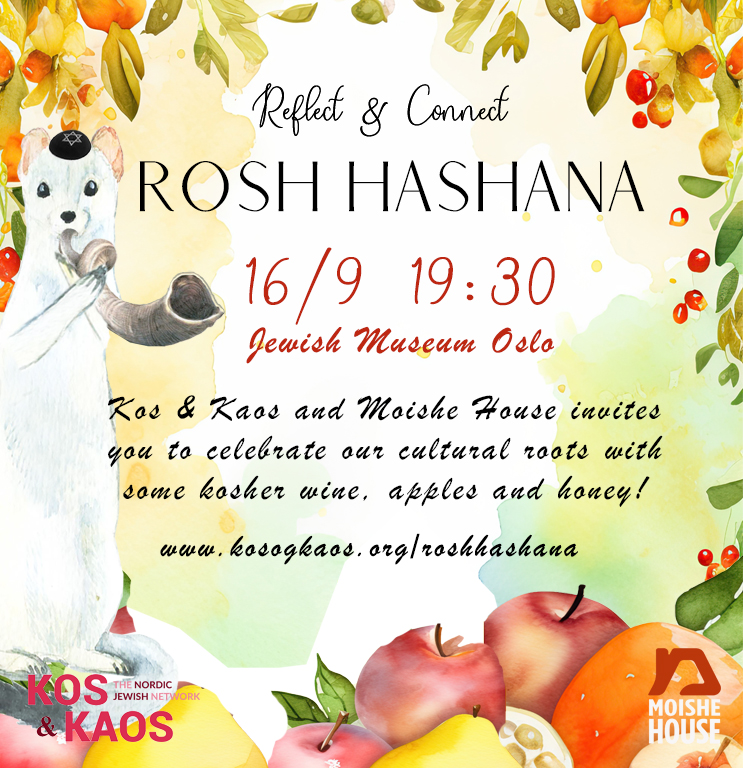
Then came October 7.
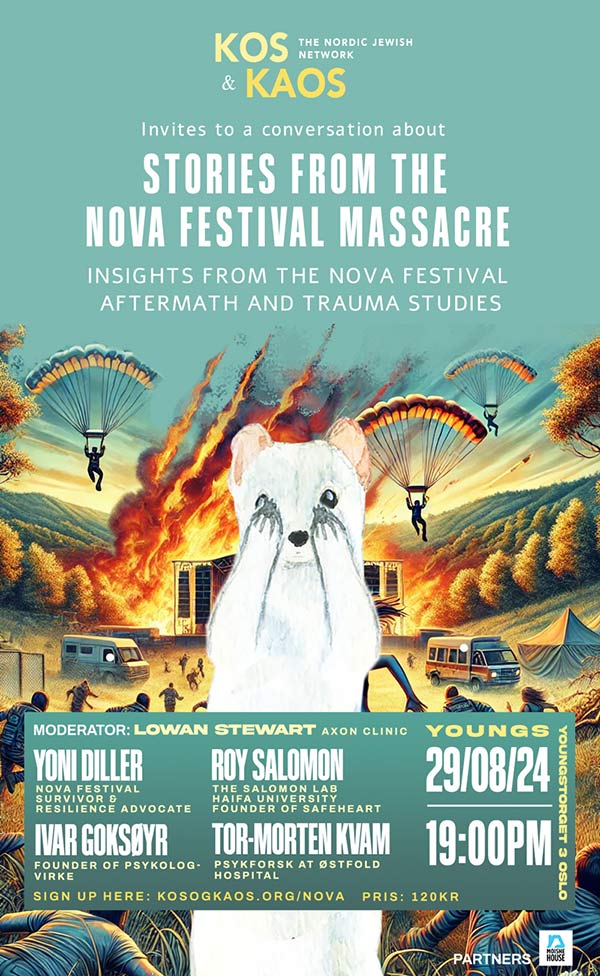
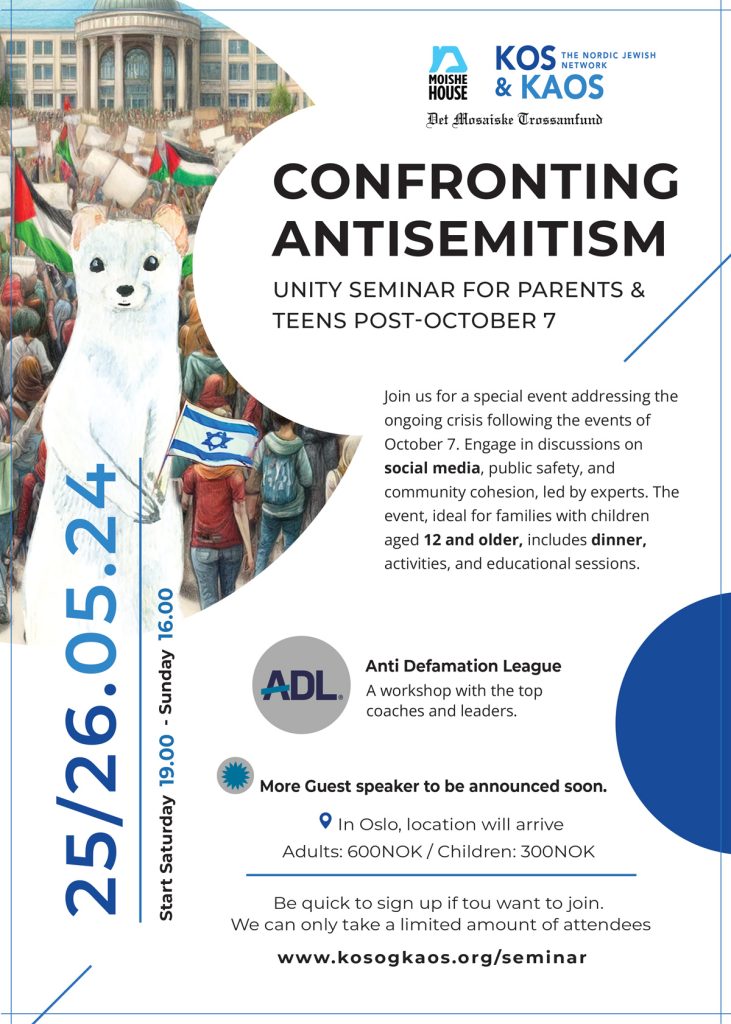
The Hamas attack, the war that followed and the rise in antisemitism far beyond Israel changed what our members needed from us. They needed to gather with people who understood and find words for experiences that were difficult to explain elsewhere.
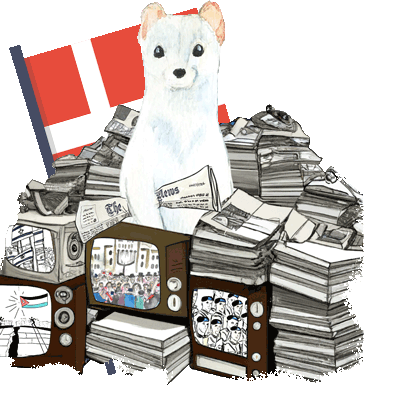
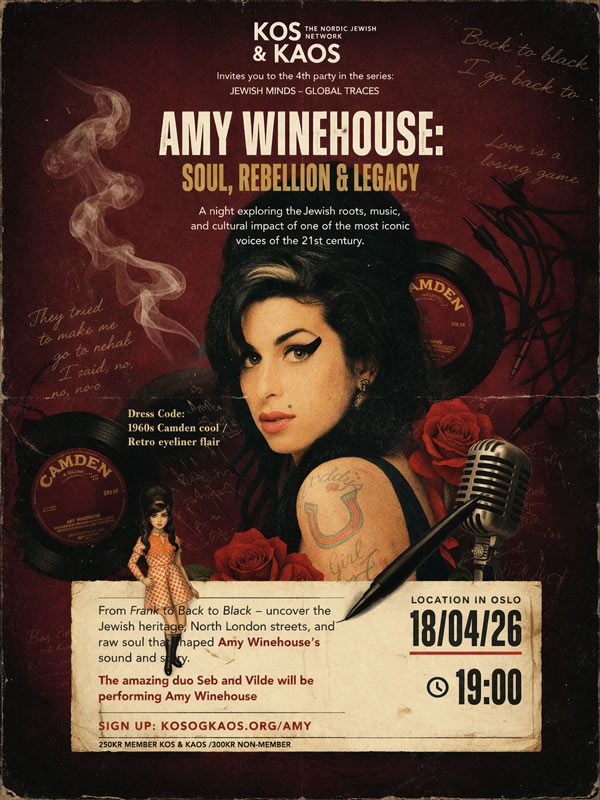
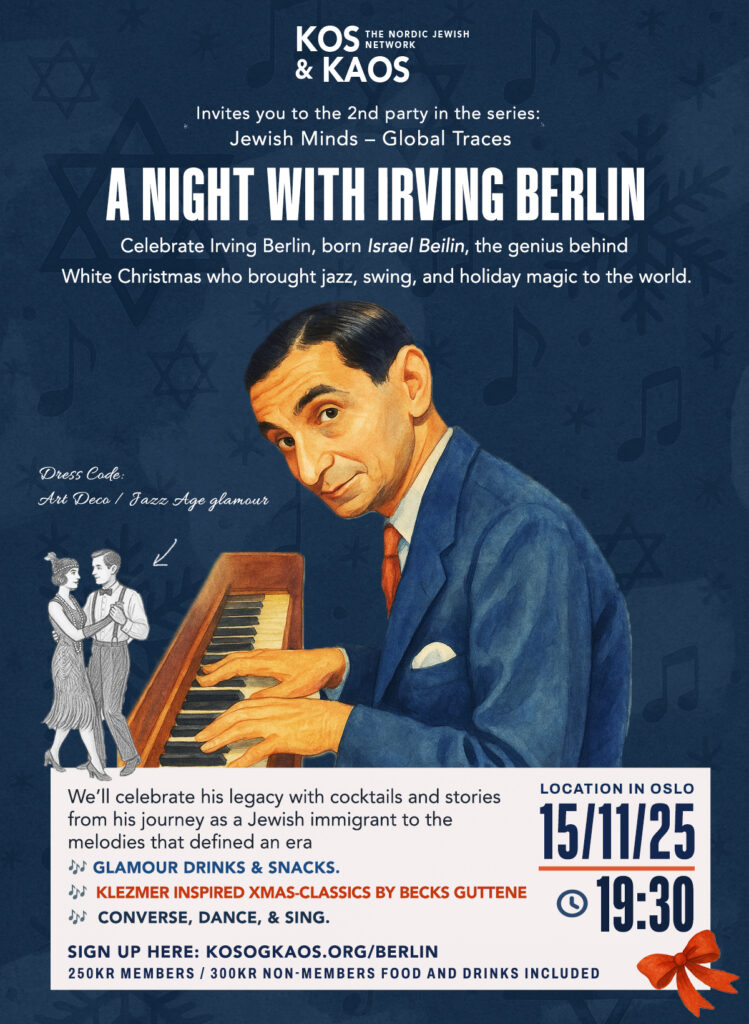
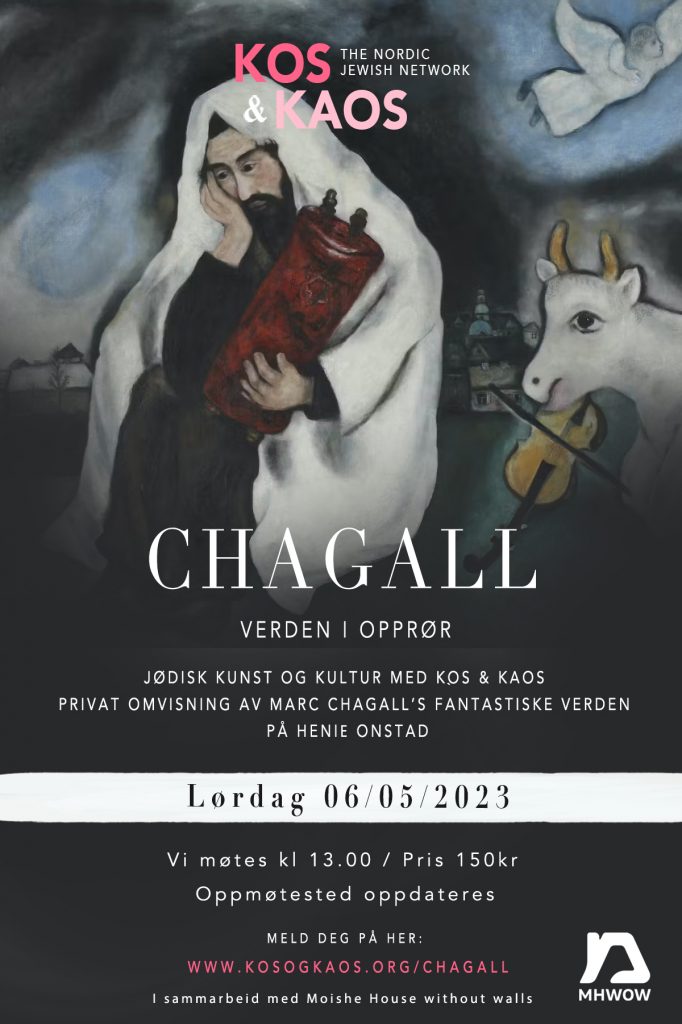
But they also needed dinner, music and laughter. They needed to dance to klezmer versions of Irving Berlin’s Christmas songs, sing along to Amy Winehouse and stand before works by Chagall and Anish Kapoor. They needed Jewish life to hold beauty, pleasure and surprise – to be lived and celebrated, not only defended.
Kos & Kaos had to remain a place to breathe. But it could not become a place to disappear.
As Jewish identity was drawn into an intense geopolitical debate, Jews were too often discussed as representatives of a state, government or war. They were part of the subject, but not always part of the conversation.
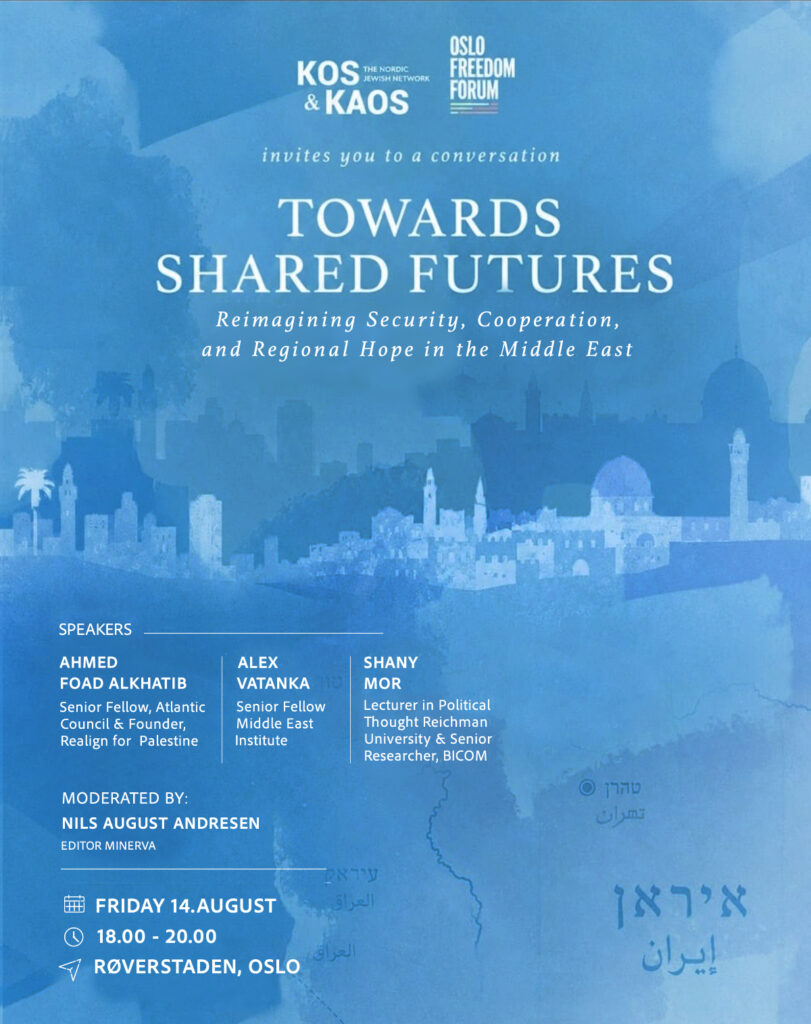
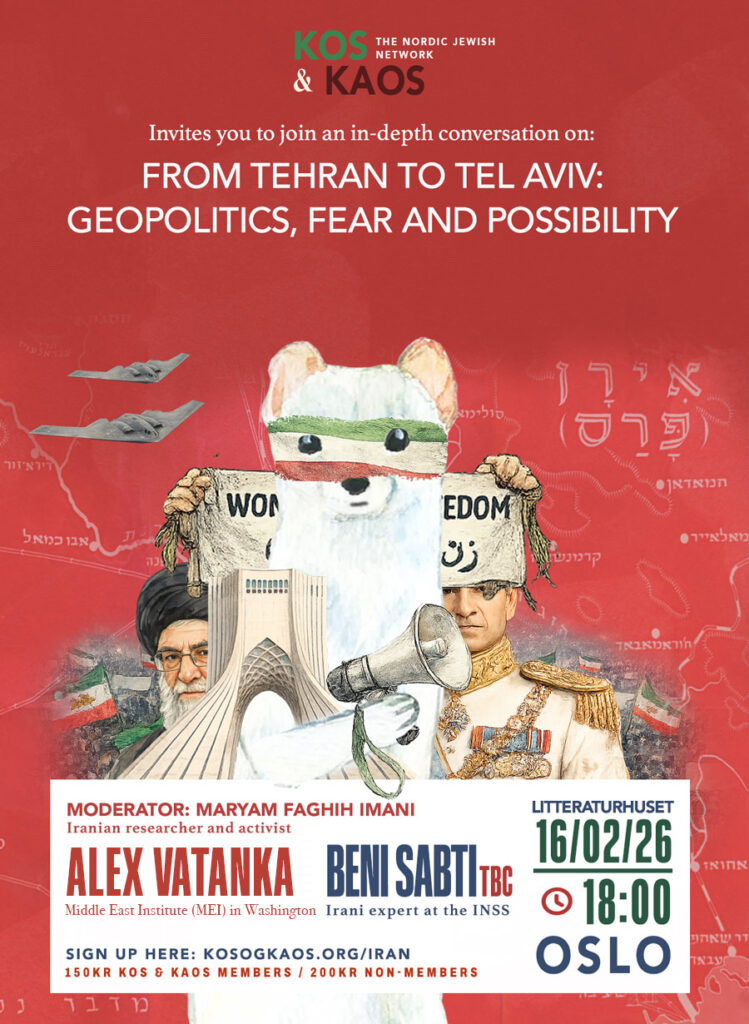
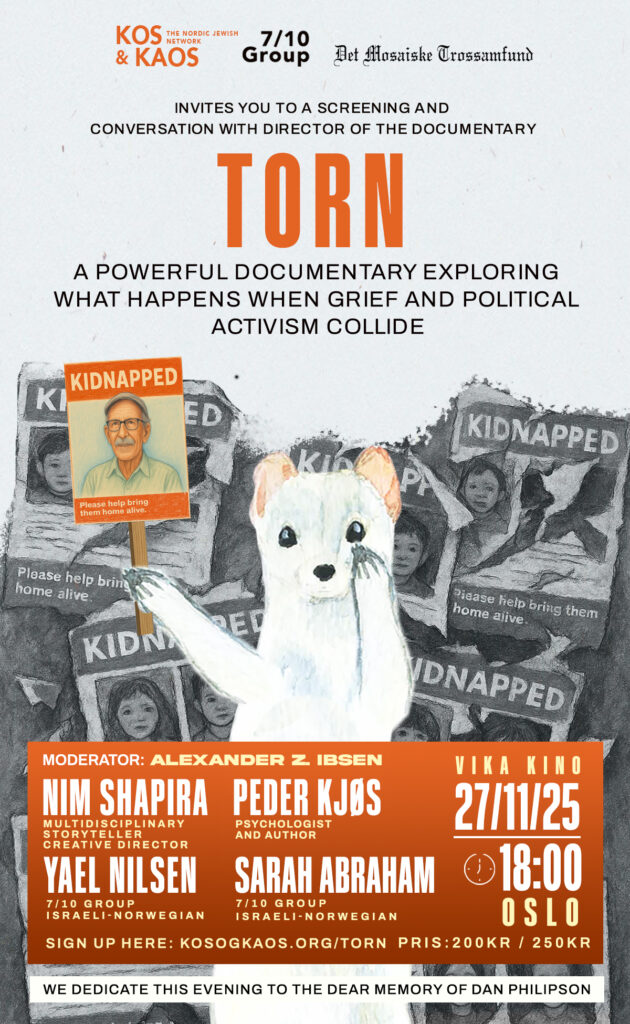
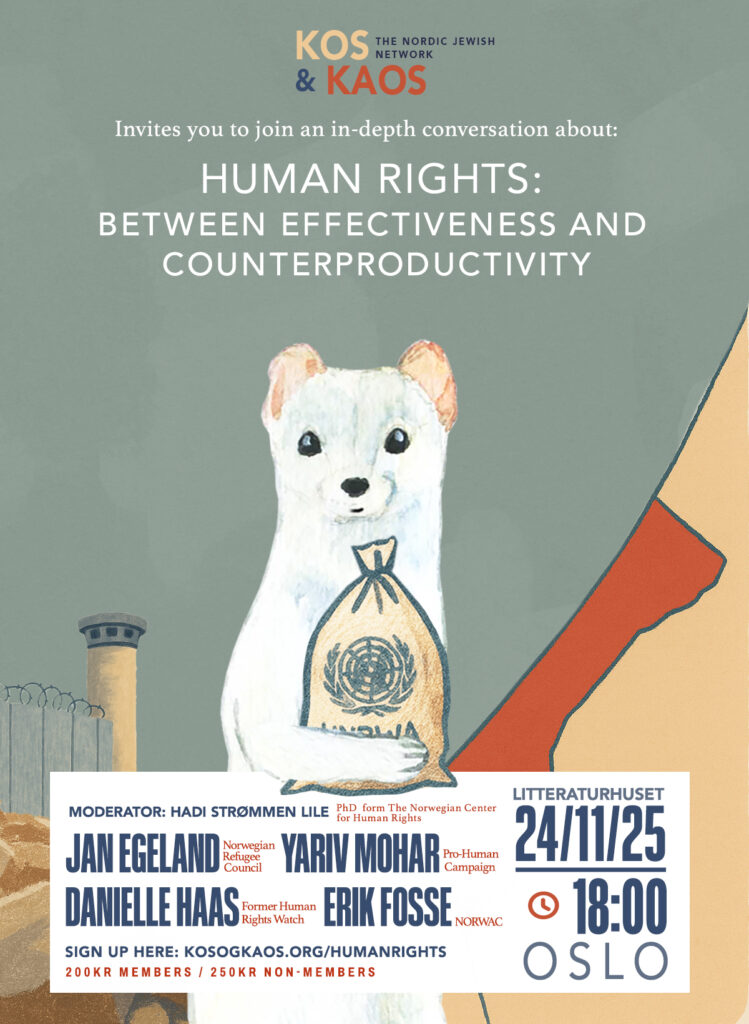
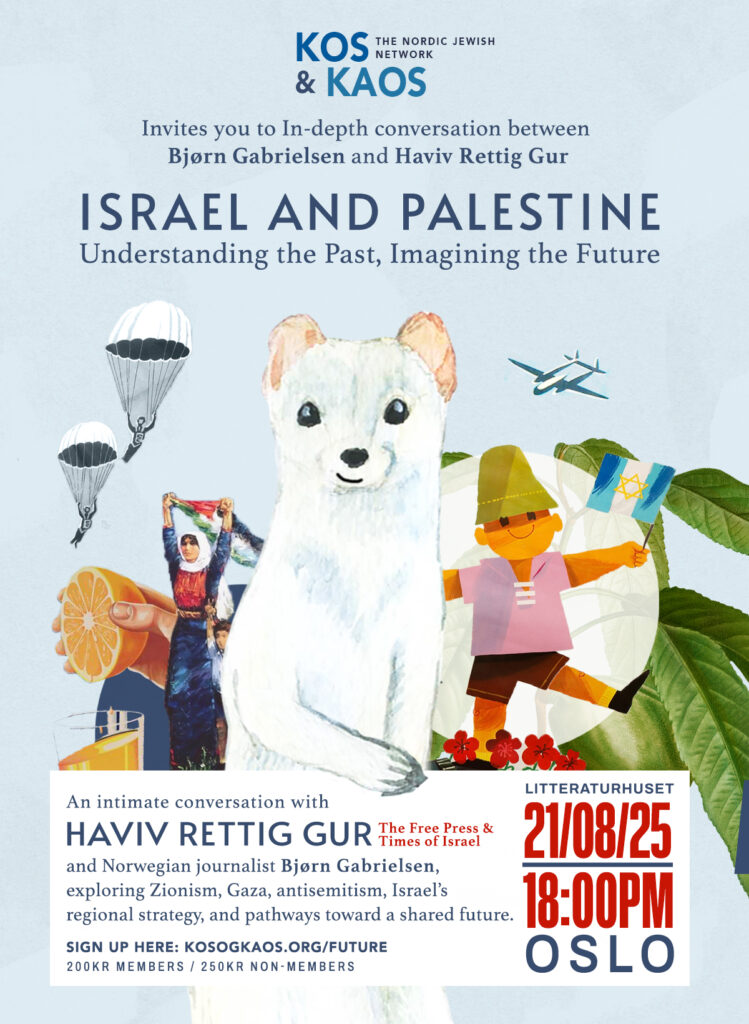
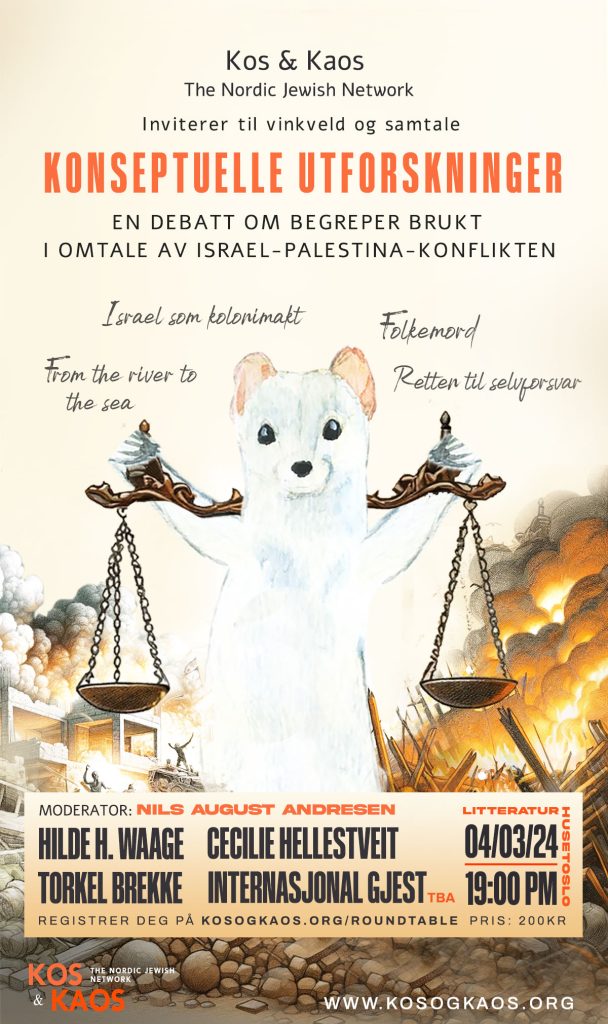
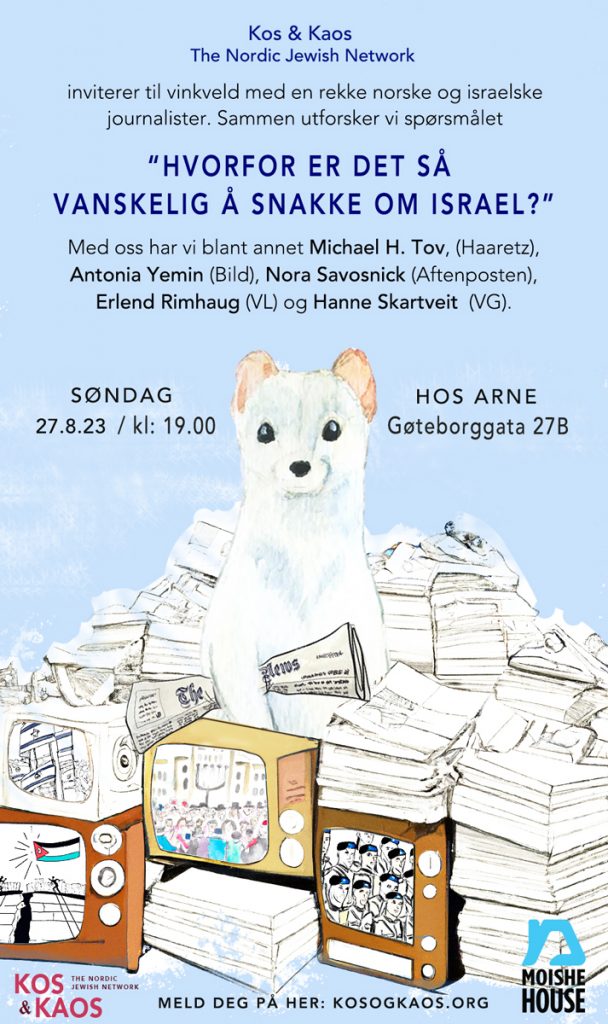
So we opened the conversations more widely. We brought Jewish voices into public debates alongside Palestinian, Iranian, Arab and international perspectives. We invited people who disagreed and made room for difficult questions without demanding simple answers.
The years after October 7 did not give Kos & Kaos a new set of values. They revealed how much our existing ones mattered.
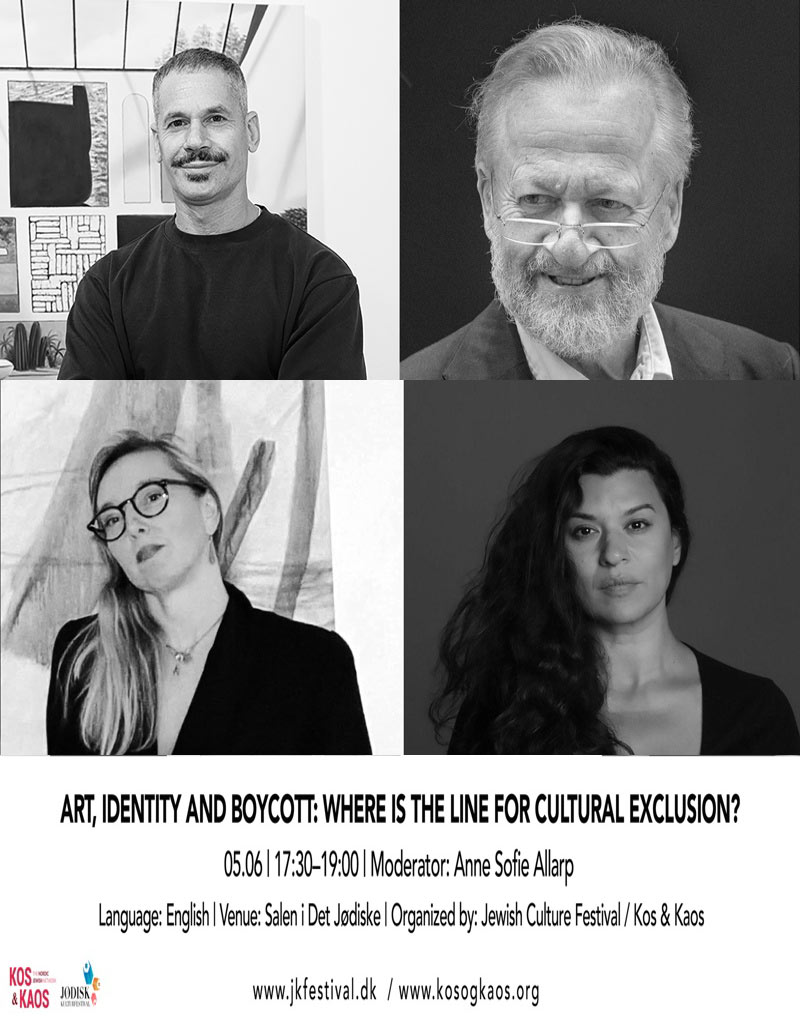
We chose to be proactive rather than reactive; to be for, rather than only against. Antisemitism, exclusion and cultural boycotts would not define our imagination. We would begin with what we wanted to create: vibrant Jewish life, deeper knowledge, artistic freedom, pluralism and meaningful connections between people.
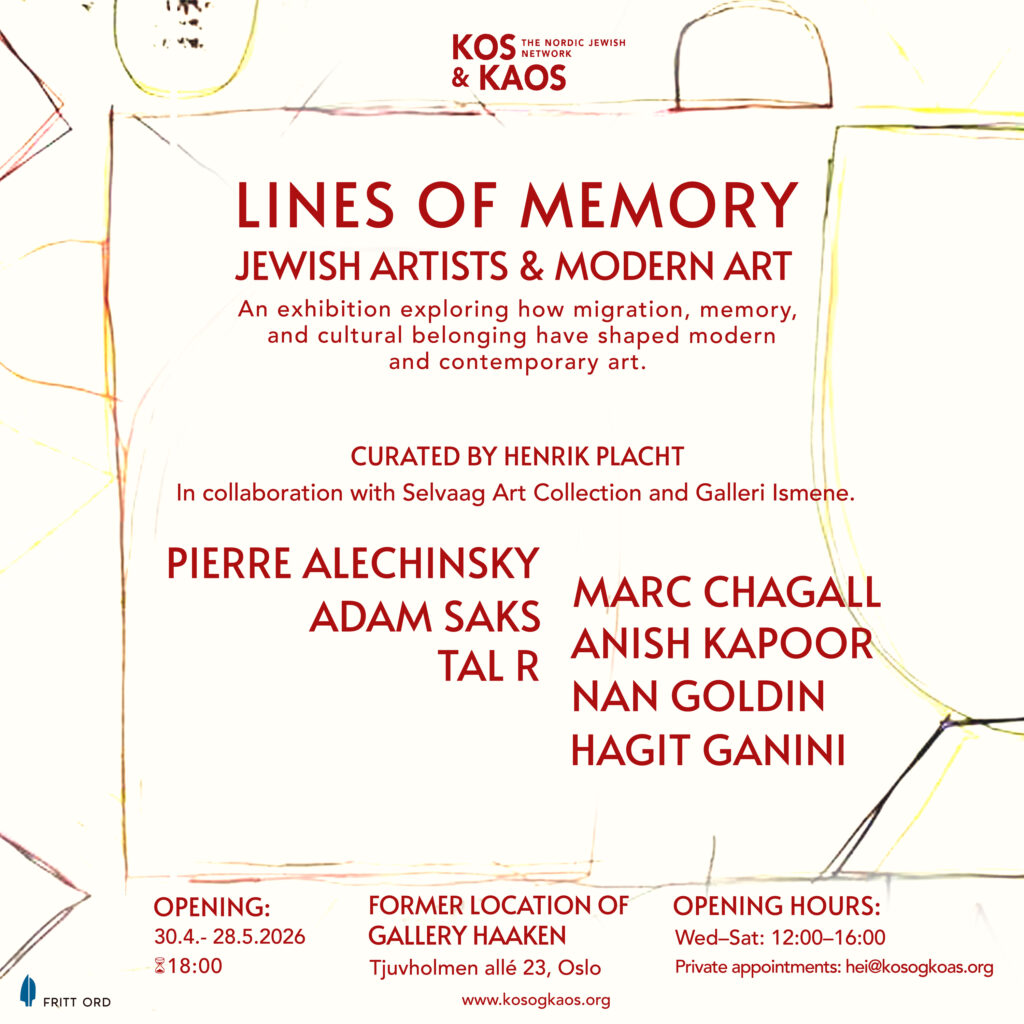
Lines of Memory grew from that choice. At a time when cultural space was narrowing for Israeli and Jewish artists, we brought Jewish, Israeli and international art into a contemporary gallery at Tjuvholmen.
The exhibition did not argue that these artists should be present. It made them present.
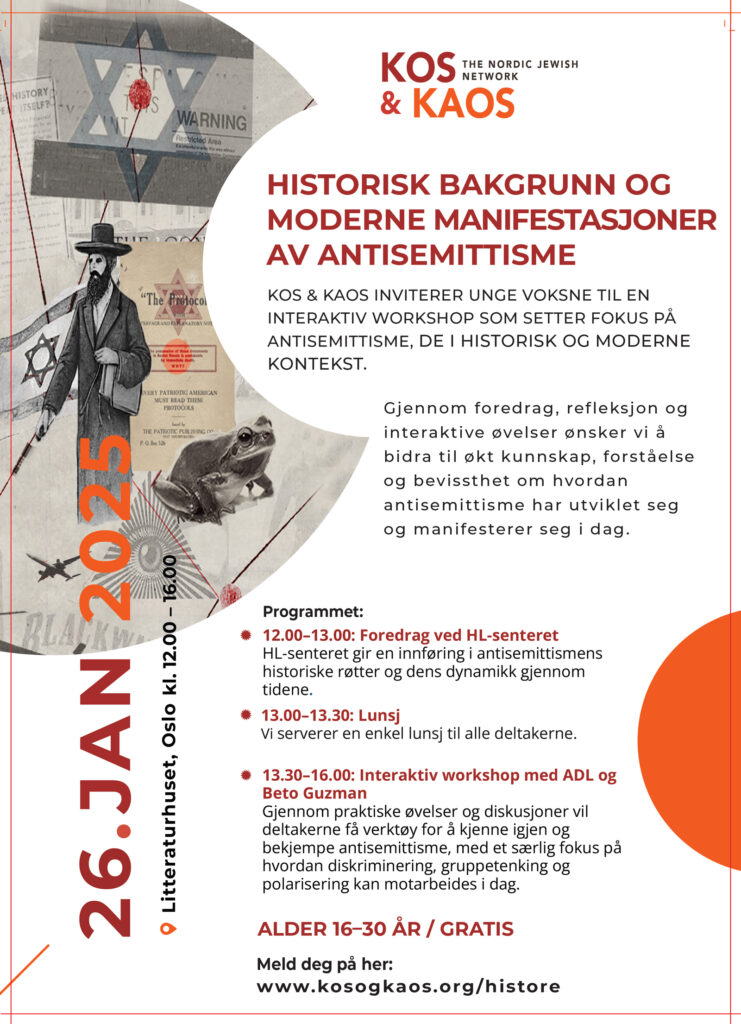
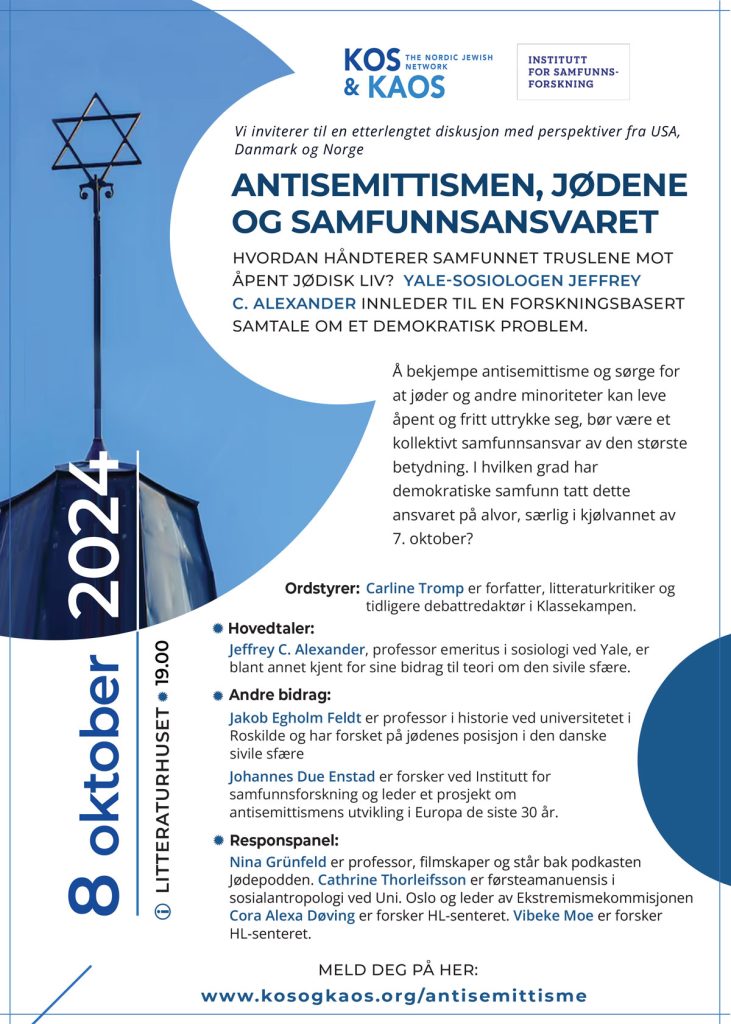
Yet the same misunderstandings kept returning in workplaces, schools, cultural institutions, the media and civil society. Jewish life was often misunderstood, while contemporary forms of antisemitism remained difficult to recognise.
We responded as we always had: by listening, asking questions and bringing people together. Gradually, we understood that institutions needed better language, deeper knowledge and practical tools.
From this need, Compass North emerged.
Kos & Kaos remains where Jewish life is lived and new ideas take shape. Compass North carries what we learn into education, research and institutional practice. We sometimes describe Kos & Kaos as the laboratory and Compass North as the translator: one creates knowledge through lived experience; the other helps that knowledge travel.
Together, they form the beginnings of a Scandinavian model – an ecosystem rooted in Jewish life and present in public life.
Our North Star is simple:
Jewish life should never be treated as the other. It should be a natural, visible and contributing part of our shared public life.
This story belongs to everyone who has entered the room – and to those who will enter next.
We do not yet know everything it can become.
That is part of the invitation.